

Property Surveys in London & the South East
Impartial advice on residential and commercial surveys across London and the South East.
Harding Chartered Surveyors provide clear, impartial advice on residential and commercial surveys across London and the South East. Whether you are buying a period property, assessing a modern home, investigating a specific defect, or seeking professional guidance before committing to a purchase, our Chartered Surveyors can help you understand the condition of the building, identify potential risks, and make informed decisions with confidence.
This hub brings together everything you need in one place: the different types of property survey available, including RICS Level 2 Home Surveys, Level 3 Building Surveys, Specific Defect Reports, Structural Surveys and Snagging Surveys; what each report includes; when a more detailed inspection is recommended; typical costs and timescales; common issues found during surveys; and practical advice for buyers, homeowners, landlords and property professionals. You’ll also find concise FAQs and links to in-depth guides covering damp, cracking, subsidence, roof defects, movement, listed buildings, period properties and survey report terminology. If you need tailored advice or an urgent inspection, contact our survey team for prompt, professional support.
Get an Instant Property Survey Quote
Tell us the property value and size, and you'll see your fixed survey fee immediately — no obligation, no waiting for a call back.
Prefer to talk it through first? Call us on 020 7736 2383 — we're available seven days a week — or send us a message and our team will come back to you promptly.
Reviewed by
David Toogood FRICS,
Chartered Surveyor at Harding Chartered Surveyors
Last reviewed
"Choosing the right survey before you buy or sell a property is one of the most important decisions you'll make — and one most people make without enough information. I've been surveying properties across London and the South East for many years, and the single most common question we get is: which survey do I actually need? The answer depends on the property type, your purpose, and what you need the report to do for you. This guide covers all the main options. If after reading it you're still unsure, call our team — we'll give you honest, impartial advice at no charge."
Which Survey do I need?
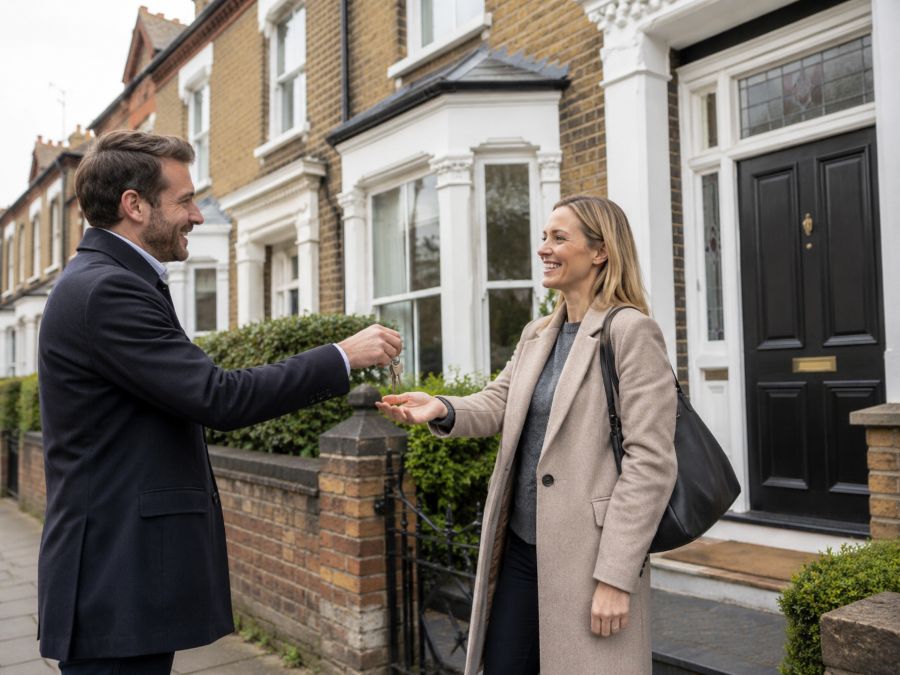
I am buying a property
You may need an RICS Home Survey
RICS Home Surveys
For buyers who want a clear overview of the property’s condition before committing to purchase.
Compare Home Surveys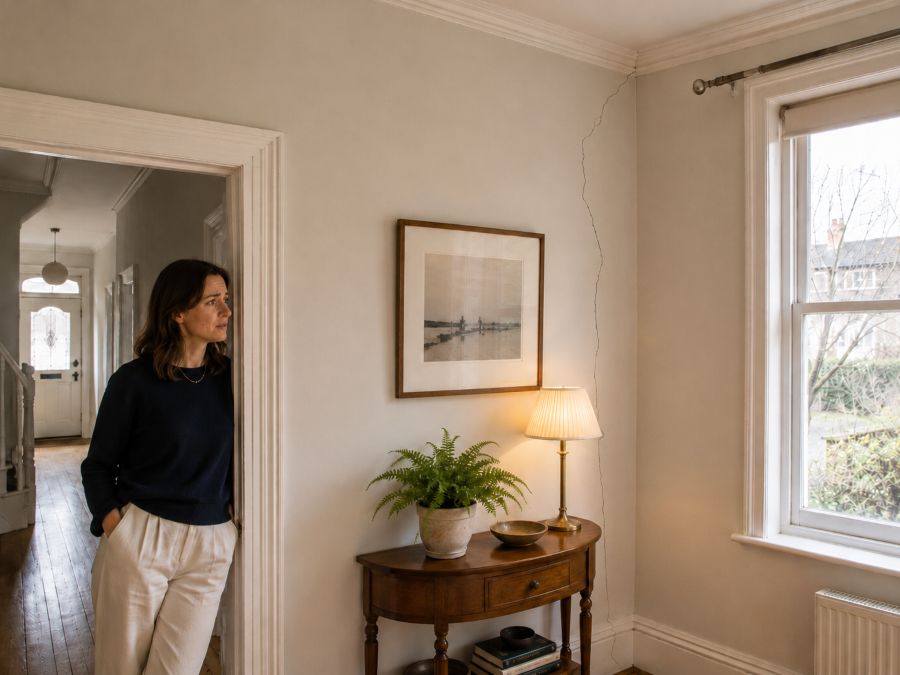
I am worried about cracks
You may need a Specific Defect Report
Specific Defect Report
For cracks, damp, movement or a single issue that needs expert inspection and clear advice.
Learn More
I am buying a new-build property
You may need a Snagging Survey
Snagging List
For new-build homes, identifying defects, unfinished works and poor workmanship before or after completion.
Learn More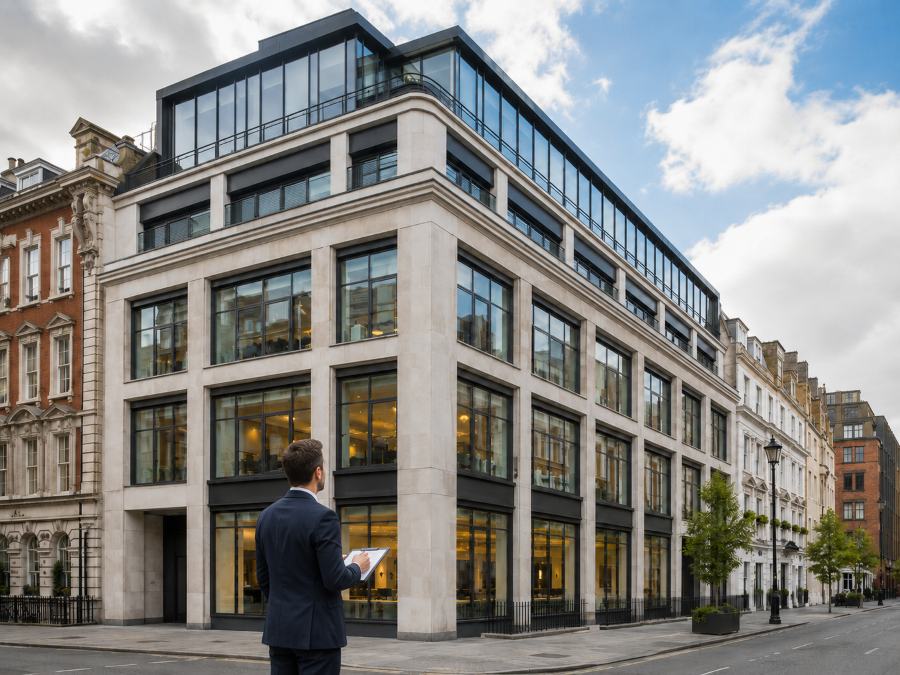
I am buying commercial premises
You may need a Commercial Survey
Commercial Survey
For commercial premises, highlighting defects, repair risks and potential liabilities before purchase or lease.
Learn More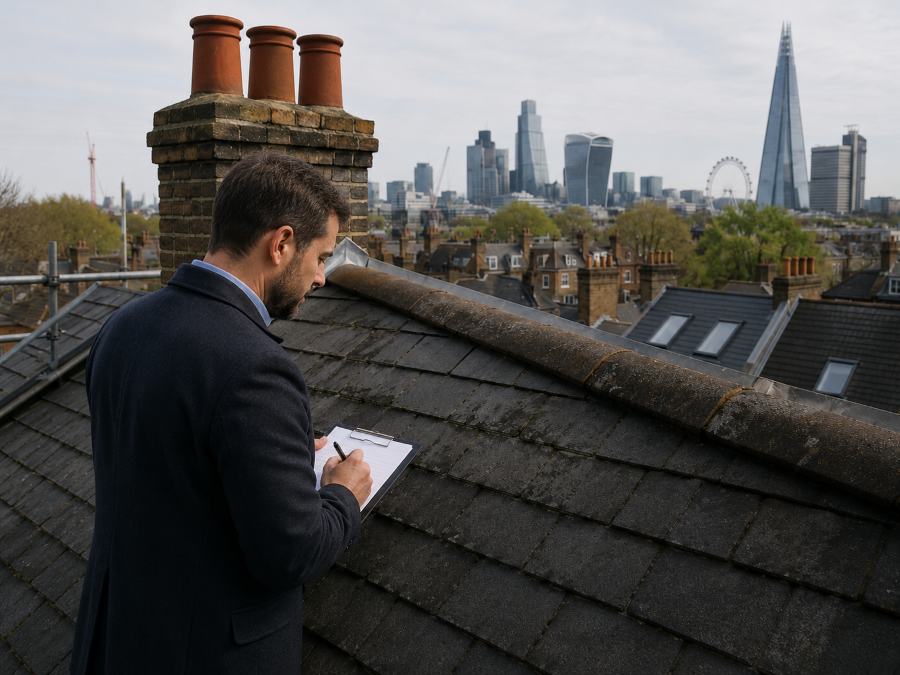
I am concerned about the roof
You may need to get a Roof Survey
Roof Survey
For leaks, slipped tiles, chimney issues, guttering defects or concerns about roof condition.
Learn MoreTypes of Home Surveys We Provide
Every property and every purchase is different, which is why the RICS offers a tiered system of Home Surveys alongside more specialist inspections. Below is a summary of each survey we provide, who it suits, and where to find the full guide.
RICS Level 2 Home Survey (Homebuyers Survey)
The RICS Level 2 Home Survey — still widely known as the Homebuyers Report — is the most popular choice for conventional houses and flats built within the last 100 years or so and in reasonable condition. Your surveyor inspects all visible and accessible parts of the property and reports on its condition using the RICS traffic-light rating system, flagging urgent defects, potential risks, and matters for your legal adviser. It is a sensible middle ground: more thorough than a mortgage valuation, but less exhaustive than a full structural inspection.
If you are buying a standard property and simply want professional reassurance before exchange, this is usually the right starting point.
RICS Level 3 Home Survey (Building Survey)
The RICS Level 3 Building Survey — formerly the full structural survey — is the most comprehensive home survey available. It is the right choice for period properties, listed buildings, larger homes, properties that have been significantly altered or extended, buildings in visibly poor condition, or any purchase where you plan major renovation work. Your surveyor examines the structure and fabric of the building in detail, explains the cause of defects, outlines repair options, and describes the consequences of leaving problems unaddressed.
RICS Home Survey - Level 2 or Level 3? A Quick Comparison
The most common decision buyers face is between the RICS Level 2 Home Survey and the Level 3 Building Survey. As a rule of thumb:
| Level 2 Home Survey | Level 3 Building Survey | |
|---|---|---|
| Best for | Conventional houses and flats in reasonable condition | Period, listed, altered, extended or visibly defective properties |
| Depth of inspection | All visible and accessible areas | Detailed inspection of structure and fabric |
| Defects | Identifies and rates defects | Explains cause, repair options and consequences |
| Repair advice | General guidance | Detailed recommendations |
| Renovation plans | Limited commentary | Suitable where works are planned |
| Report format | Traffic-light condition ratings | Full narrative report |
If you're still unsure which is right for your property, our comparison guide walks through the differences in detail with real examples.
















Other Surveys We Provide
Structural Inspection
If you have specific concerns about the structural integrity of a building — cracking, bowing walls, sloping floors, signs of movement or settlement — a structural survey provides a focused, expert assessment of the structure itself. Our surveyors work closely with our in-house structural engineer where intrusive investigation or engineering calculations are required.
→ Read our full guide to Structural Inspection
Specific Defect Report
Not every problem needs a whole-property survey. If you are concerned about a single issue — a damp patch, a crack above a window, a leaking bay roof, condensation, or movement to one elevation — a Specific Defect Report gives you a targeted inspection of that one defect, a clear diagnosis of its cause, and practical recommendations for repair. It is often the most cost-effective way for existing homeowners and landlords to get professional answers.
→ Read our full guide to Specific Defect Reports
Snagging Survey (New-Build)
New-build homes are rarely defect-free. A snagging survey identifies incomplete works, poor workmanship and defects — from cosmetic finishing issues to more serious construction faults — so they can be put right by the developer, ideally before completion or within the warranty period. Our surveyors produce a detailed, photographed snagging list you can submit directly to your builder.
→ Read our full guide to Snagging Lists
Roof Survey
Roofs are the most exposed element of any building and among the most expensive to repair. Our roof surveys assess the covering, structure, chimneys, flashings, parapets and rainwater goods, identifying leaks, slipped or delaminating tiles, failed felt, and ponding to flat roofs. Where safe access is limited, we can carry out a drone survey within the legal flying zones of Greater London and the Home Counties.
Subsidence Survey
Subsidence is one of the most serious — and most misdiagnosed — problems affecting properties in London and the South East, particularly on the region's shrinkable clay soils. Our subsidence surveys distinguish genuine subsidence from normal thermal or settlement cracking, identify likely causes such as tree roots or leaking drains, and set out a clear path to resolution.
→ Read our full guide to Subsidence Surveys
Commercial Building Survey
Buying or leasing commercial premises carries different risks from residential property — not least full repairing and insuring (FRI) lease obligations that can leave tenants liable for substantial repair costs. Our commercial building surveys identify defects, repair liabilities and compliance issues across offices, retail units, warehouses and leisure premises before you commit.
→ Read our full guide to Commercial Building Surveys
Dilapidation Survey
For landlords and tenants of commercial property, dilapidations are a major source of dispute at lease end. Our dilapidation surveys and schedules of dilapidation set out repair obligations clearly, whether you are a landlord seeking to protect your asset or a tenant looking to limit your liability.
→ Read our full guide to Dilapidation Surveys
Schedule of Condition
A Schedule of Condition records the condition of a property at a fixed point in time — most commonly before a commercial lease is signed (to cap a tenant's repairing liability) or before neighbouring building works begin. It is a precise, photographed factual record prepared by a Chartered Surveyor.
How Much Does a Property Survey Cost?
Survey fees are based primarily on the purchase price (or estimated value) of the property and its size. A Level 2 Home Survey costs less than a Level 3 Building Survey for the same property, reflecting the depth of inspection and reporting involved. Specific Defect Reports and Roof Surveys are typically priced according to the nature of the issue and access requirements.
Rather than publishing a generic price list, we provide an instant, fixed-fee quotation based on your actual property — with no obligation. Enter the property value and size into our instant quote tool and you'll see your fee immediately. All fees are exclusive of VAT.

For unusual properties — listed buildings, or multi-unit blocks — contact us for a bespoke quotation.
How Long Does a Survey Take?
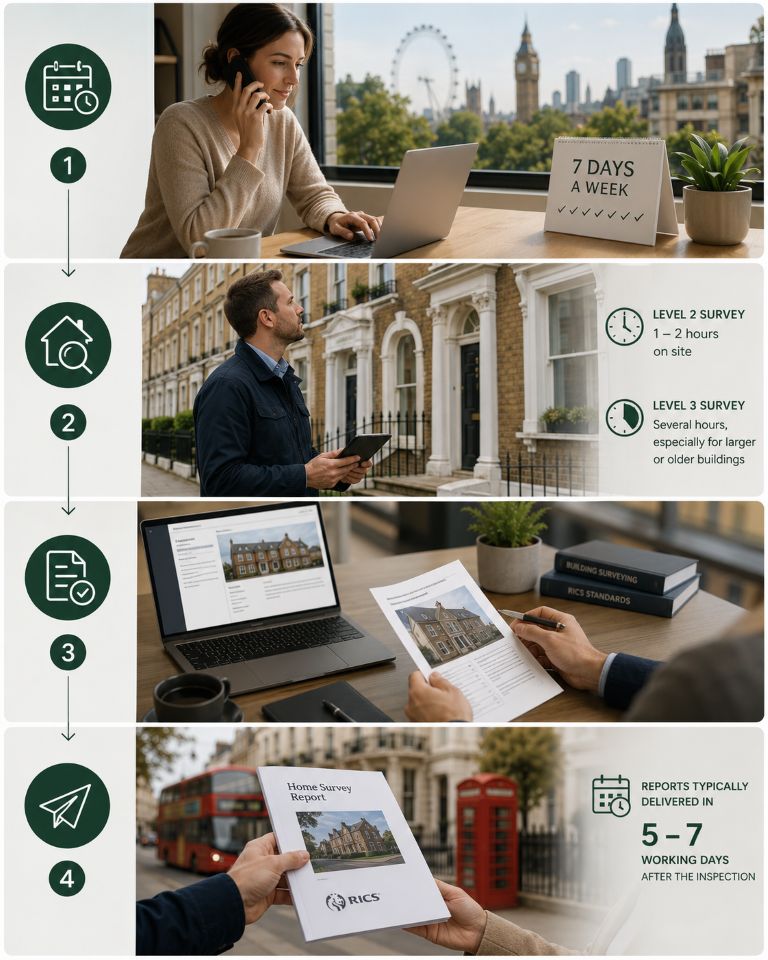
We aim to make the process as fast as the conveyancing timeline demands:
Booking: We can usually arrange an inspection within a few working days of instruction, and often sooner where the transaction is urgent. Our team is available seven days a week.
The inspection: A Level 2 Home Survey typically takes between one and two hours on site, depending on the size of the property. A Level 3 Building Survey is more thorough and can take several hours, particularly for larger or older buildings.
The report: Reports are typically delivered within around five to seven working days of the inspection depending on various factors.
Common Issues Found During Surveys
Across London and the South East, the defects our surveyors encounter most frequently include:
Damp: Rising damp, penetrating damp and condensation are endemic in older solid-wall properties. Correct diagnosis matters — the treatments (and costs) for each are very different.
Cracking and movement: Most cracks are cosmetic, caused by thermal movement or minor settlement. A minority indicate progressive structural movement or subsidence, particularly on London clay. Distinguishing the two is one of the most valuable things a survey does.
Roof defects: Slipped or delaminating slates, failed flat-roof coverings, defective flashings and blocked or undersized rainwater goods. See our roof survey guide for the warning signs.
Timber decay: Wet rot, dry rot and wood-boring insect damage, most often found in poorly ventilated sub-floor voids and roof spaces of period properties.
Drainage: Defective, blocked or root-damaged drains — a frequent hidden cause of damp and movement.
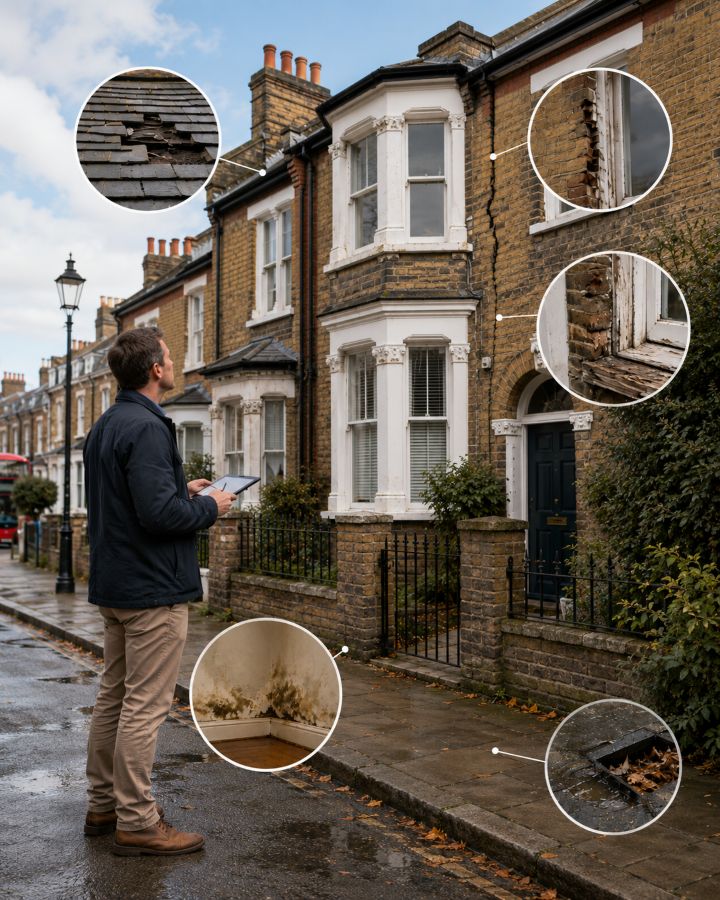
A good survey doesn't just list these issues — it tells you how serious they are, what they will cost to address, and how they should affect your decision.
Why Choose Harding Chartered Surveyors?
RICS-regulated. Harding Chartered Surveyors is regulated by the Royal Institution of Chartered Surveyors. Every survey is carried out by a qualified Chartered Surveyor and prepared to RICS standards.
Established 1997. We have been surveying property across London and the South East for nearly three decades, with deep familiarity with the region's Victorian, Edwardian, Georgian and modern housing stock.
Local offices across the region. With 13 offices across London and the South East, your surveyor knows the local construction types, soil conditions and common defects in your area.
Available seven days a week. Property transactions don't keep office hours, and neither do we.
Speak to your surveyor. We encourage clients to call and discuss their report directly with the surveyor who carried out the inspection — at no extra charge.
Trusted by buyers and professionals. We are consistently recommended by estate agents, solicitors and repeat clients across London. Read our reviews.

“At Harding Chartered Surveyors, our role is to give clients clear, practical advice they can rely on. Whether it is a home survey, valuation or specialist inspection, we aim to make the process straightforward, thorough and useful from start to finish.”
Standard Building Survey Process
Get an Instant Quote
Book Your Survey
The Property Inspection
Receive Your Report
Areas We Cover
Our Chartered Surveyors carry out surveys across all of Greater London and the wider South East, including:
Central London · North London · North West London · East London · South East London · South West London · West London · Surrey · Hertfordshire · Essex · Berkshire · Buckinghamshire · Hampshire · Oxfordshire · Sussex
Frequently Asked Questions
What is the difference between a Homebuyers Report and a Building Survey?
A Homebuyers Report (RICS Level 2 Home Survey) is a mid-level survey suited to conventional properties in reasonable condition, using traffic-light condition ratings. A Building Survey (RICS Level 3) is the most comprehensive option, with a detailed inspection of the structure and fabric, an explanation of the cause of defects, and repair advice — making it the right choice for older, larger, altered or visibly defective buildings. Our full comparison guide covers the differences in detail.
Do I really need a survey if I'm getting a mortgage valuation?
Yes. A mortgage valuation is carried out for the lender's benefit, not yours — it confirms the property is adequate security for the loan and frequently involves little or no internal inspection. It will not identify defects, and you usually won't even see the report. A survey is the only independent professional assessment of the property's condition carried out for you.
Which survey do I need for a Victorian or Edwardian property?
For period properties — which make up a large proportion of London's housing stock — we generally recommend a Level 3 Building Survey. Solid-wall construction, ageing roof coverings, timber floors and decades of alterations mean these buildings carry risks a Level 2 survey is not designed to investigate in depth.
How much does a property survey cost?
Fees depend on the property's value, size and the type of survey. Use our instant quote tool for a fixed fee based on your specific property — it takes under a minute and carries no obligation.
How quickly can you carry out a survey?
We can usually inspect within a few working days of instruction depending on demand, with the report following within around five to seven working days. Our team is available seven days a week.
Can I speak to the surveyor after I receive my report?
Yes, your surveyor will be happy to discuss their findings by phone and answer any questions about defects, repair costs or how the findings should affect your purchase, at no additional charge.
What happens if the survey finds serious problems?
A survey that uncovers serious defects is doing its job. Depending on the findings, you can renegotiate the purchase price, ask the seller to remedy the issues before exchange, obtain contractor quotations to budget accurately, or — in the worst cases — withdraw before committing. Your surveyor can advise on the practical significance of any defect found.
Do you survey flats and leasehold properties?
Yes. For flats, the inspection covers the subject flat together with the visible and accessible communal areas and the exterior of the building, since defects to the wider block can carry significant service-charge liabilities for leaseholders.
Do you carry out commercial surveys?
Yes. We provide commercial building surveys, dilapidation surveys and schedules of condition for offices, retail, warehouse and leisure premises across London and the South East.
Are your surveyors RICS qualified?
Yes. Harding Chartered Surveyors is regulated by the Royal Institution of Chartered Surveyors, and all surveys are carried out by RICS-qualified Chartered Surveyors. You can verify our registration on the RICS Firms register.

 Trustpilot