Chartered Surveyors in Kensington
Kensington has an unusually broad range of housing: Georgian streets, Victorian terraces, mansion flats, converted houses and modern apartments.
Request current fees for your property and required service
No obligation · Discuss your requirements with our team
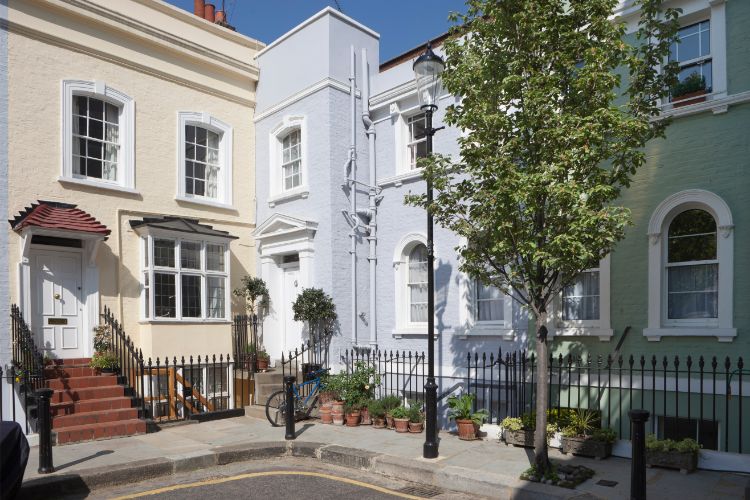
Kensington has an unusually broad range of housing: Georgian streets, Victorian terraces, mansion flats, converted houses and modern apartments. Each has different points of vulnerability and different limits on what a buyer can inspect. Harding Chartered Surveyors helps clients understand the condition of the particular building and choose a survey that answers the purchase questions they actually have.
We provide RICS Level 2 and Level 3 Home Surveys, formal valuations for defined purposes and Party Wall advice. Tell us about the address, age, known alterations and any symptoms you have seen. We can then discuss an appropriate service rather than assuming that every Kensington home needs the same report.
Which Kensington home survey is right for you?
Level 2 is usually appropriate for a conventional property that appears to be in reasonable condition and does not present unusually complex construction. It offers a visual assessment, condition ratings and advice on defects or risks that warrant further attention. A recently built, straightforward flat may fit this description, provided the buyer understands which communal parts are accessible.
Do not confuse the survey-only service with the version that includes a valuation. If you need an opinion of market value, explain that at the outset so the correct scope is quoted.
Level 3 is more detailed and includes fuller discussion of defects, potential consequences and repair options. It may be a better choice for an older terrace, a significantly altered house, unusual construction, poor apparent condition or a substantial renovation proposal. Its value is not in declaring a building defect-free but in helping you understand the evidence and its practical implications.
Concealed structural elements, covered finishes and inaccessible roofs remain limitations. Where the available evidence is insufficient, the report should say what further enquiry is needed.
The RICS consumer guide explains the levels. For Kensington, discuss the specific building, intended works and access before selecting one. Property value by itself is not a reliable way to choose the survey level.
Kensington details worth investigating
The Royal Borough of Kensington and Chelsea says its Kensington Conservation Area is the largest of the borough’s conservation areas and contains buildings of many ages, from early Georgian development onward. It also identifies separate Kensington Court, Kensington Palace and Kensington Square conservation areas. That variety cautions against a generic description of “Kensington property”: the construction and constraints of a building near Kensington High Street may differ from those of an estate flat or a house on a quieter side street.
For a traditional terrace, inspect visible roof coverings, chimney stacks, masonry, external joinery, floors and the evidence of past changes. A rear addition may meet older walls and foundations in ways that deserve careful attention. A surveyor can comment on what is visible but should not imply that structural support or approvals have been verified merely because a room appears stable.
RBKC publishes separate conservation-area descriptions and maps for Kensington, Kensington Court, Kensington Palace and Kensington Square. If you intend external alterations, search the actual address. The designation may affect planning requirements, while the survey remains a condition assessment.
Flats raise ownership and access questions. In a mansion block, the roof, entrance hall, façade, drainage and shared services may be maintained collectively. In a converted house, the history of subdivision can determine where services run and which parts are the landlord’s responsibility. The lease and management information should be reviewed alongside the survey; a condition report cannot establish service-charge obligations from appearance alone.
Where a building has a basement or lower-ground floor, note the position of external ground, drainage, ventilation and any evidence of moisture. The correct conclusion may be that further monitoring or specialist diagnosis is required, not that every lower-ground room has an inherent problem. Likewise, cracks need interpretation in context: their pattern, extent, associated distortion and repair history matter more than the fact that a crack exists.
A practical Kensington property checklist
A buyer may also want to know what major work the building has undergone recently. Ask the seller or managing agent about roof repairs, façade works, damp treatment and structural alterations. Guarantees and invoices can provide context, but their existence is not proof that an underlying issue is resolved. The survey should assess present evidence and identify where documentation needs checking.
For an apartment in a larger block, request information on planned expenditure before exchange. A surveyor may see a façade that needs repair but cannot determine each leaseholder’s contribution without the lease and accounts. Keeping these professional roles separate leads to a clearer picture of physical and financial risk.
Where access to communal areas is refused, the useful response is to record the limitation and identify the decision it affects. Silence about inaccessible parts can give a buyer a misleading sense of certainty.
Valuations and Party Wall Matters
A lender’s mortgage valuation serves its lending decision; it is not a survey of the home for the buyer. Harding also undertakes formal valuations for defined purposes including tax, probate and leasehold transactions. The basis of value, date and intended users need to be established before the report is prepared. A valuation of a lease interest, for example, is not the same task as assessing the building’s condition. Read Harding’s valuation guidance for more about the available services.
Explore valuation servicesExtensions, excavations and changes to a wall shared with a neighbour may require consideration under the Party Wall etc. Act 1996. Whether the Act applies depends on the proposed work, boundary position and statutory distances. Do not assume every loft conversion or basement scheme automatically requires the same notice. Early advice can help avoid serving the wrong notice or overlooking an affected owner.
For the local process, see Harding’s Kensington Party Wall page, with guidance by Jeremy Goldney.
Explore Party Wall MattersWhat happens after you enquire?
Give us the full address, estate-agent details, approximate age and type of the property, plus known alterations and concerns. For a flat, tell us its floor, whether it is purpose-built or converted, and what common-area access can be arranged. We can discuss the survey level and fee on the basis of those details rather than relying on a postcode or asking price alone.
The report records visible condition at the time of inspection, explains significant findings and recommends proportionate next steps. You can then ask the seller for documents, have your solicitor review legal questions or obtain specialist quotations. A Home Survey does not replace title work, planning searches, testing of services or invasive structural investigation.
Useful independent sourcesA Harding office for Kensington enquiries
Chelsea office
Harding Chartered Surveyors
134 Lots Road
London SW10 0RJ
Phone: 020 7736 2383
Email: enquiries@hardingsurveyors.co.uk
For central and southern Kensington enquiries, Chelsea is the nearest Harding office identified. The exact property address should still be supplied when requesting an inspection; western Kensington addresses may be better served from Fulham.
Chelsea office detailsWhat our clients say















Chartered Surveyors in Kensington FAQs
Which survey should I choose for a property in Kensington?
The appropriate level depends on the building’s construction, condition, alterations and your plans. Level 2 may suit a conventional property in reasonable condition; Level 3 provides a more detailed service for older, altered or complex buildings. Confirm the scope before booking.
Does a mortgage valuation replace a home survey?
No. A mortgage valuation is prepared for the lender’s purpose and does not replace an independent condition survey for the buyer.
Can you also arrange a formal property valuation?
Explain the purpose, required valuation date and intended users. A suitably instructed valuer can confirm the scope, evidence and reporting requirements. A valuation and a building condition survey answer different questions.
When should I ask about party wall matters?
Seek advice while proposals are being developed if work may affect a shared structure, involve a new wall at the line of junction or include qualifying nearby excavation. Party wall procedure is separate from planning and Building Regulations.
What information should I send for a quotation?
Provide the full address, property type, tenure, sales particulars, known alterations and the reason you need advice. Include drawings, notices or specific concerns where relevant.
Are fees and report timing the same for every property?
No. The service, building, complexity, access and information available affect the instruction. Request current fees and confirm the scope, VAT treatment and expected report timing in the quotation rather than relying on a general guide.
Request property advice in Kensington
Send the full address, property details and the reason you need advice. Include sales particulars, drawings and any known concerns. We will confirm the service, scope, current fee, VAT treatment and expected timing before instruction.
Call 020 7736 2383 or send our team a message if you would like advice before requesting a quotation.