

Homebuyers Survey | RICS Level 2 Home Survey
A Homebuyers Survey is the most popular property survey in the UK, and for good reason: it gives you an independent, professional assessment of a property's condition before you commit to one of the largest purchases of your life. For buyers in London and the South East — where period terraces, converted flats and extended properties are the norm rather than the exception — that assessment can be the difference between a confident purchase and an expensive surprise.
At Harding Chartered Surveyors, our RICS-accredited surveyors carry out Homebuyer Surveys on residential properties of all kinds, from Victorian conversions to modern new builds. Below we explain exactly what a Homebuyers Survey covers, what it costs, and how to decide whether it's the right level of survey for the property you're buying. You can also compare every property survey type we provide on our surveys hub page.
In short
A Homebuyers Survey (officially the RICS Home Survey – Level 2) is a mid-level property survey carried out by a chartered surveyor. It's the right choice for most conventional homes and flats in reasonable condition, sitting between a basic condition report and a detailed Building Survey.
- What it does: assesses the property's condition and flags defects — damp, subsidence, roof issues and more — using a clear traffic-light rating system.
- Who it's for: buyers of standard houses and flats roughly within the last 100–150 years and in reasonable condition.
- Cost: from £700, depending on the property's size and value.
RICS Level 2 Survey Quote
From £700, a Homebuyers Survey gives you an independent, RICS-accredited assessment of your future home — and the confidence that comes with it. Get a free, no-obligation quote in minutes, or speak to one of our team directly.
What is a Homebuyers Survey?
A Homebuyers Survey is a mid-level property survey carried out by a qualified chartered surveyor. Under the RICS Home Survey Standard, it is officially known as a RICS Home Survey – Level 2, though most buyers, agents and solicitors still refer to it by its long-standing name: the Homebuyer Report or Homebuyers Survey.
It sits between the most basic condition report (Level 1) and the detailed Building Survey (Level 3). For the majority of conventional homes in reasonable condition — flats, modern houses, and standard period properties that haven't been heavily altered — a Homebuyers Survey provides the right balance of detail and value.
The report uses a clear traffic-light rating system so you can see, at a glance, where the property stands:
- Green (1) — no repair currently needed.
- Amber (2) — defects that need attention or monitoring, but aren't urgent.
- Red (3) — serious or urgent defects that require investigation or repair.
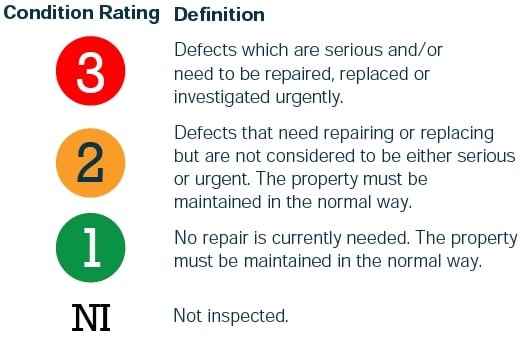
This makes the findings easy to act on, even if you've never read a survey before, and gives you and your solicitor a clear basis for any conversations with the seller.
Benefits of an RICS Homebuyers Survey
A Homebuyers Survey does more than list faults. It gives you:
- A clear picture of condition — so you understand exactly what you're buying.
- Negotiating power — red and amber findings give you a documented basis to renegotiate the price or ask the seller to put things right before completion.
- An optional market valuation — carried out by an RICS registered valuer at a discounted rate when added to your survey, confirming the asking price stacks up.
- An optional reinstatement cost assessment — the figure you need to insure the property for the right amount.
- Long-term savings — catching a defect early is almost always cheaper than discovering it after you've moved in.
- Peace of mind — knowing a chartered surveyor has independently assessed the home before you commit.
Example Homebuyers Survey Report
Download a sample of the typical Homebuyer survey report our Chartered Surveyors produce.
How much does a Homebuyers Survey cost?
The cost of a Homebuyers Survey depends mainly on the property's size and value. As a guide:
| Survey type | Typical cost | Best for |
|---|---|---|
| Homebuyers Survey (RICS Level 2) | from £700 | Conventional homes and flats in reasonable condition |
| Building Survey (RICS Level 3) | from £850 | Older, larger, altered or non-standard properties |
All fees are exclusive of VAT and based on properties within the M25. Larger or higher-value properties are quoted individually, and you can add a market valuation or reinstatement cost assessment at a reduced rate when booked alongside your survey.
For an exact figure based on your property, request an instant quote — it takes a couple of minutes.
Reviewed by
David Toogood FRICS,
Chartered Surveyor at Harding Chartered Surveyors
Last reviewed 9th

Do you need a Homebuyers Survey?
A mortgage valuation is not a survey. It's a brief check carried out for your lender to confirm the property is adequate security for the loan — it isn't designed to protect you, and it won't tell you about the defects that could cost you thousands after completion.
A Homebuyers Survey is for the buyer. It's worth commissioning when:
- You're buying a conventional house or flat built within roughly the last 100–150 years and in reasonable condition.
- You want a professional opinion on the property's condition before exchange.
- You'd like the option of an accompanying market valuation to check you're paying a fair price.
If the property is older, listed, of unusual construction, in visibly poor condition, or you're planning significant works, a more thorough Building Survey (RICS Level 3) is usually the better choice. Not sure which you need? Our guide to choosing between a Homebuyer Report and a Building Survey walks through it.
What does a Homebuyers Survey check?
A Homebuyers Survey is a visual inspection of all the accessible parts of the property, inside and out. Your surveyor assesses the building's overall condition and flags the issues most likely to affect its value, safety or your future costs. In a London context, that commonly includes:
- Damp and ventilation — rising and penetrating damp, condensation and timber decay, which are widespread in older terraces and lower-ground-floor flats.
- Structural movement — cracking and subsidence, a recurring issue in parts of London where shrinkable clay soils and mature trees combine to affect foundations.
- Roofs and rainwater goods — the condition of pitched and flat roofs, gutters and downpipes, including the flat-roof extensions common on period conversions.
- Walls, windows and joinery — the state of the external envelope, pointing, render and original windows.
The surveyor will also note anything that warrants further specialist investigation — for example, suspected Japanese knotweed, electrical or gas safety, or a one-off structural concern that may need a single defect report or structural engineer.
Homebuyers Survey FAQs
What is a Homebuyers Survey? A Homebuyers Survey is a mid-level property survey carried out by a chartered surveyor, officially known as the RICS Home Survey – Level 2. It assesses a property's condition and uses a traffic-light system to highlight defects before you buy.
How much does a Homebuyers Survey cost? Costs start from around £700 and depend mainly on the property's size and value. You can add a market valuation or reinstatement cost assessment at a reduced rate when booked alongside the survey.
What's the difference between a Homebuyers Survey and a Building Survey? A Homebuyers Survey (Level 2) suits standard properties in reasonable condition and focuses on visible defects. A Building Survey (Level 3) is more detailed and better suited to older, larger, altered or unusual properties.
Is a Homebuyers Survey worth it? For most conventional homes, yes. The cost is small relative to the purchase price, and spotting defects early can save you far more through avoided repairs or price renegotiation.
Recent Reviews from Harding Chartered Surveyors
















Why choose Harding Chartered Surveyors?
Harding Chartered Surveyors is an established, RICS-regulated firm with offices across London and the South East. Every survey is carried out by a qualified, RICS-accredited surveyor who knows the quirks of the local housing stock — the Victorian and Edwardian terraces, the period conversions, the flat-roof extensions and the clay-soil subsidence that come up time and again in this part of the country.
What you can expect from us:
- Genuine local expertise — surveyors who inspect London property day in, day out, not a national call centre.
- Clear, readable reports — detailed findings, professional photographs and plain-English advice, not jargon.
- Post-survey support — a follow-up conversation with your surveyor to talk through the findings and what they mean for your purchase and your solicitor.
- A strong track record — rated Excellent by our clients across more than 150 independent reviews.
We also offer Roof Surveys and a full range of RICS valuations, so whatever the property throws up, you're covered.

 Trustpilot