
Can my Neighbour Build on my Boundary Wall?
Reviewed by Jeremy Goldney, Party Wall and Boundary specialist | Last updated: 26 August 2026
Can my neighbour build on my boundary wall? In many cases, a neighbour can build up to the boundary on their own land, provided the work complies with planning rules, building regulations and any relevant property rights. They cannot normally build a new wall astride the boundary, use your land or alter a wall that belongs solely to you without the necessary consent.
If the proposed work is covered by the Party Wall etc. Act 1996, your neighbour must serve the correct written notice before work begins. The required notice and timing depend on the work: building a new wall at the boundary, working to an existing party structure and excavating near your building are treated differently.
Before responding, establish where the legal boundary lies, who owns the wall and exactly what work is proposed. Title plans can provide useful context but do not always establish the precise boundary position. This guide explains the main rules, the notices you may receive and what to do if you are concerned about the work.
Can my neighbour build on my boundary wall, do they have the right?
A neighbour can generally build up to the boundary on their side, subject to planning permission where required, building regulations and private property rights. Building a new wall astride the boundary is different: under section 1 of the Party Wall etc. Act 1996, this normally requires the adjoining owner’s written consent. If consent is not given, the building owner may usually build wholly on their own land instead.
Party Wall notices are required only where the proposed work falls within the Act. A notice for a new wall at the line of junction is normally served at least one month before work starts. Work to an existing party structure generally requires two months’ notice, while qualifying excavation works generally require one month’s notice. The exact procedure depends on the design and location of the work.
Building slightly inside the boundary does not automatically avoid the Act. Excavations close to your building, cutting into a party wall or other notifiable work may still trigger its procedures. Planning permission and the Party Wall Act are also separate: obtaining planning permission does not remove the need to serve a valid Party Wall notice.
Boundary Survey Quotation
If you would like a quotation or some advice for any boundary issues, then please select "Party Wall & Neighbourly Services" and then "Boundary Matters"
Can my neighbour or I use each other’s boundary walls?
A neighbour may build a new wall wholly on their own land up to the boundary, subject to the relevant rules. A new wall built astride the boundary requires the adjoining owner’s express written consent. If consent is refused, the wall must generally be positioned wholly on the building owner’s land.
An existing wall may be a party wall even if the exact legal boundary is uncertain, but a garden fence is not automatically a party structure under the Act. Work such as cutting into, raising, thickening or rebuilding a qualifying party wall may require notice. Consent to the notice can avoid a dispute and Party Wall Award; an Award is generally needed when a valid notice is disputed or not agreed within the statutory period.
Can I build on my neighbour’s land?
Generally, you cannot build above ground on your neighbour’s land without an express legal right or their consent. The Party Wall etc. Act can permit ordinary foundations for a wall at the boundary to project beneath neighbouring land where necessary, provided the statutory procedure is followed. However, special foundations such as reinforced concrete foundations cannot be placed under a neighbour’s land without their written consent. Boundary ownership, access rights and the Party Wall Act should therefore be considered separately.
What is the process for building on the boundary?
If your neighbour proposes work near the boundary, take these steps before agreeing or objecting:
1. Ask for the drawings, foundation details and proposed start date.
2. Check the title documents and any previous boundary agreements, while remembering that Land Registry title plans usually show only the general boundary.
3. Establish whether the work involves a new wall at the boundary, an existing party wall or qualifying excavation close to your building.
4. Check that any Party Wall notice describes the work correctly and allows the proper statutory notice period.
5. Record the condition of your property before work begins. If the notice is disputed or you are unsure about its validity, obtain advice from an experienced party wall surveyor.
If a valid notice is served and you do not consent within 14 days, a dispute is deemed to have arisen under the Act. Surveyors can then agree or determine a Party Wall Award setting out how and when the work should proceed, access arrangements, safeguards and responsibility for damage. Not responding does not prevent the statutory process from continuing.



Buying a Lower-Ground or Basement Flat in London: What to Check Before Choosing a Survey

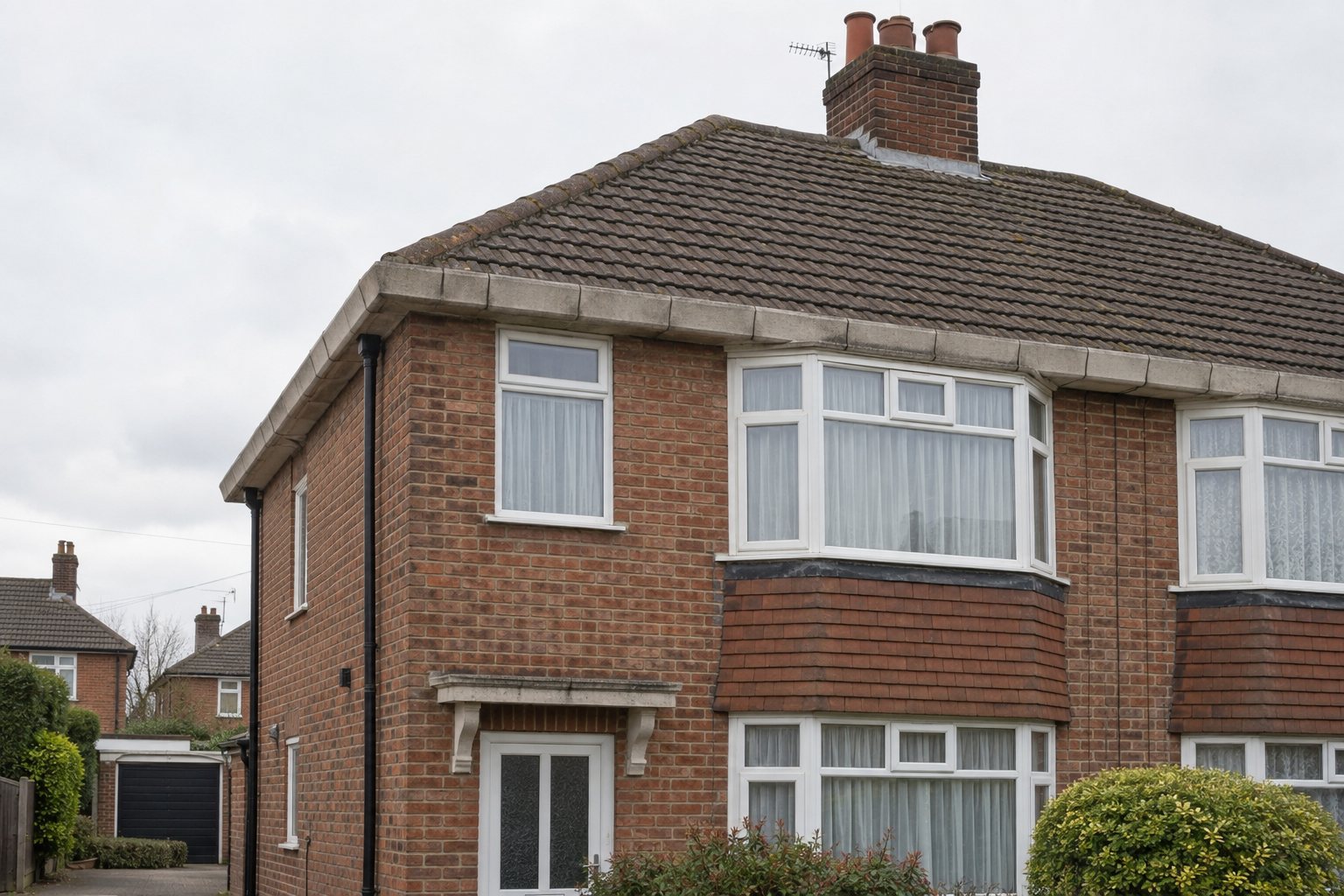
Buying a 1930s Semi in London: What to Check Before Choosing a Survey

Buying a Victorian Conversion Flat in London: What to Check Before Choosing a Survey
Finlock Concrete Gutters Found During a Building Survey
Asbestos in a House Survey: What Buyers Should Do
What defines a boundary?
A boundary line could be defined visually by a wall or hedge, fence line, or other structure – however, it may be invisible and marked only by a mutual understanding as to where the line falls.
This is where renovation and development can become tricky especially when a property is sold and taken on by a new homeowner, perhaps one who does not share the same open attitude and who is more intent on marking the outline of their property with a defined boundary line.
If you encounter such issues, the Title Deeds of the property should outline where the boundary line has historically been mapped, with a chartered surveyor able to interpret historical information, identify any historical party structure, and draw up a precise boundary plan for both properties.
What if there is a disagreement about the boundary wall?
Finally, in the case of any form of disagreement, a party wall surveyor can be brought in to assess the site and to use old records and historical deeds to ascertain the position of a boundary, to highlight the exact line which separates one property from the next, and to create a party wall agreement between neighbouring properties.
If an agreement cannot be reached, any and all extension or building work will need to end just before the boundary line to avoid the wall being impacted by work from either party.
Recent Reviews from Harding Chartered Surveyors
















Summary of Whether My Neighbour Can Build on my Boundary Wall?
For more advice on this and to understand the ins and outs of renovation and extension work on neighbouring properties, feel free to reach out to our team of party wall surveyors.