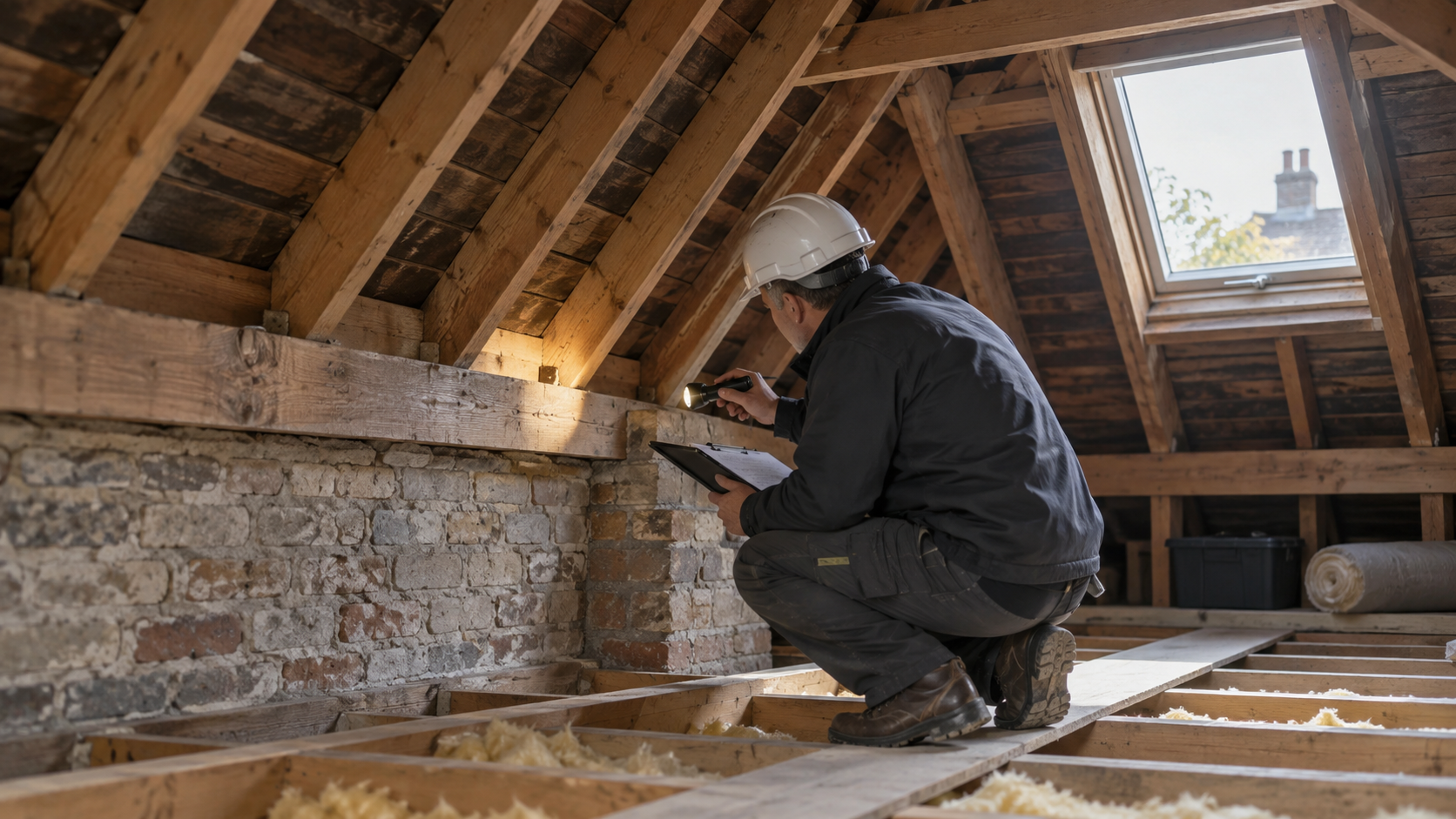

Possible sulphate attack should be investigated, but a raised or cracked concrete floor does not prove that it is present. The defect occurs when moisture carries reactive sulphates from certain types of hardcore into susceptible concrete, usually where there is no effective separating membrane. A chartered surveyor may identify visible signs and recommend the next step; confirmation can require intrusive access, representative sampling and laboratory analysis. If you are buying, establish the cause, extent and likely repair scope before exchange rather than relying on the property’s age, postcode or a single test result.
In short
- The issue is most strongly associated with some solid floors built approximately between 1945 and 1970.
- Reactive fill, moisture, susceptible concrete and a route between them are normally required.
- Doming, unevenness and patterned cracking are warning signs, not a diagnosis.
- A normal RICS home survey is visual and non-destructive; fitted finishes can conceal the slab.
- Reliable confirmation may require holes through the floor, representative samples and specialist laboratory interpretation.
- Repair ranges from monitored observation in limited cases to floor and hardcore replacement in more serious cases.
What is sulphate attack?
In this context, sulphate attack is a chemical reaction affecting a concrete floor slab or the oversite concrete beneath a suspended floor. Some older properties were constructed using fill containing soluble sulphates. When that material is damp and lies directly against susceptible concrete, sulphates can migrate into the cement paste and form expansive reaction products.
One such product is ettringite. As it develops within the concrete, expansion can create internal stress, cracking and deformation. A different mechanism, known as the thaumasite form of sulphate attack, can also weaken and soften the cement matrix in suitable conditions. A homebuyer does not need to diagnose either reaction from appearance; the important point is that the process can both expand and deteriorate the concrete.
Official UK technical documents sometimes use the alternative spelling “sulfate”. This article uses the conventional British spelling “sulphate” throughout.
Why are some post-war houses more at risk?
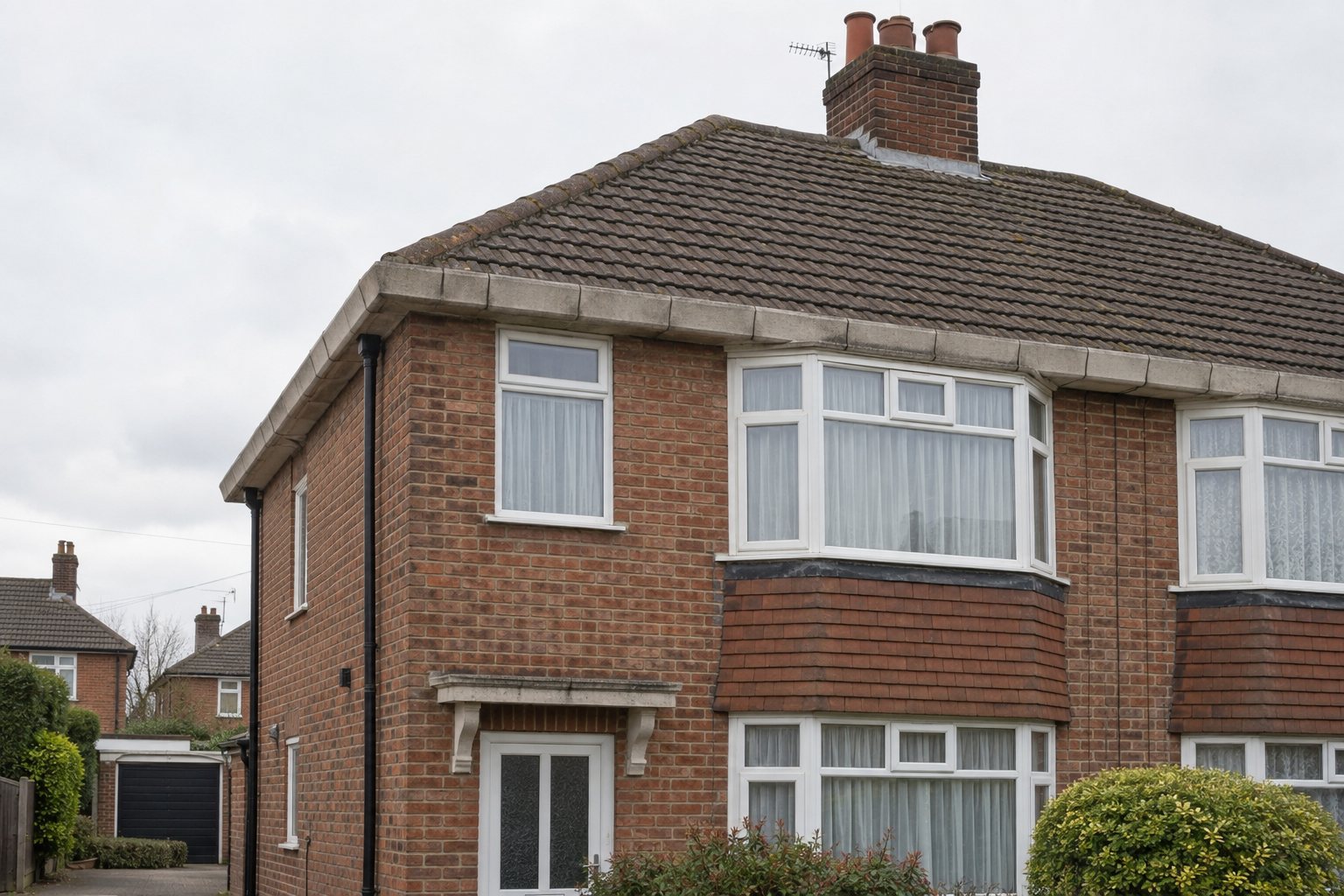
The best-known UK cases relate to homes constructed approximately between 1945 and 1970. During the post-war building programme, locally available colliery spoil and other industrial by-products were sometimes used as hardcore below solid concrete floors. Materials cited in government guidance include burnt colliery spoil, often called red ash or red shale, furnace bottom ash, some slags, sulphide-bearing shale and demolition rubble contaminated by gypsum plaster.
Hardcore is the compacted fill used to raise levels and provide a firm base beneath a ground floor. Suitable modern fill should be stable, free-draining and chemically appropriate. The concern in an affected older property is not merely that hardcore exists, but that it may contain mobile sulphates and be in contact with concrete in the presence of moisture.
Government guidance identifies four particularly important factors:
- A substantial amount of soluble sulphate in the underlying material.
- Concrete that is chemically susceptible to attack.
- Moisture to transport the dissolved salts.
- Direct contact or an ineffective barrier between the fill and the slab.
An effective damp-proof membrane separating the hardcore from the concrete is a significant protective measure. Conversely, a high sulphate content in one sample does not, by itself, show that the slab is being damaged.
Location is a clue, not a conclusion
The largest historic concentrations reported to the Building Research Establishment were in and around former coalfields and related industrial centres. These included parts of the English Midlands, north-east England and the central belt of Scotland. Scattered cases have also been identified elsewhere in the UK, sometimes involving local geological material or plaster-contaminated demolition rubble.
That history should be used sensibly. A 1950s house in a former mining area may merit closer attention if the floor is visibly distorted, but neither the construction date nor the postcode confirms a defect. Equally, the absence of a well-known local history does not completely rule it out. In London and the South East, other causes of floor distortion may be more common and should remain in the surveyor’s differential diagnosis.
What are the visible signs of sulphate attack?
The first noticeable change may be an uneven floor. Expansive pressure can lift the centre of a slab into a shallow dome because the concrete is restrained at its edges. The upper surface may then develop radiating or map-pattern cracks. A screed or floor finish can crack before the structural slab beneath is visible.
In more developed cases, the sideways expansion may affect adjacent construction. Possible signs include:
- a floor that rises towards the centre of a room;
- stepped, radiating or map-pattern cracking to screed or tiles;
- increasing ridges or level changes across the floor;
- internal doors rubbing because frames or partitions have distorted;
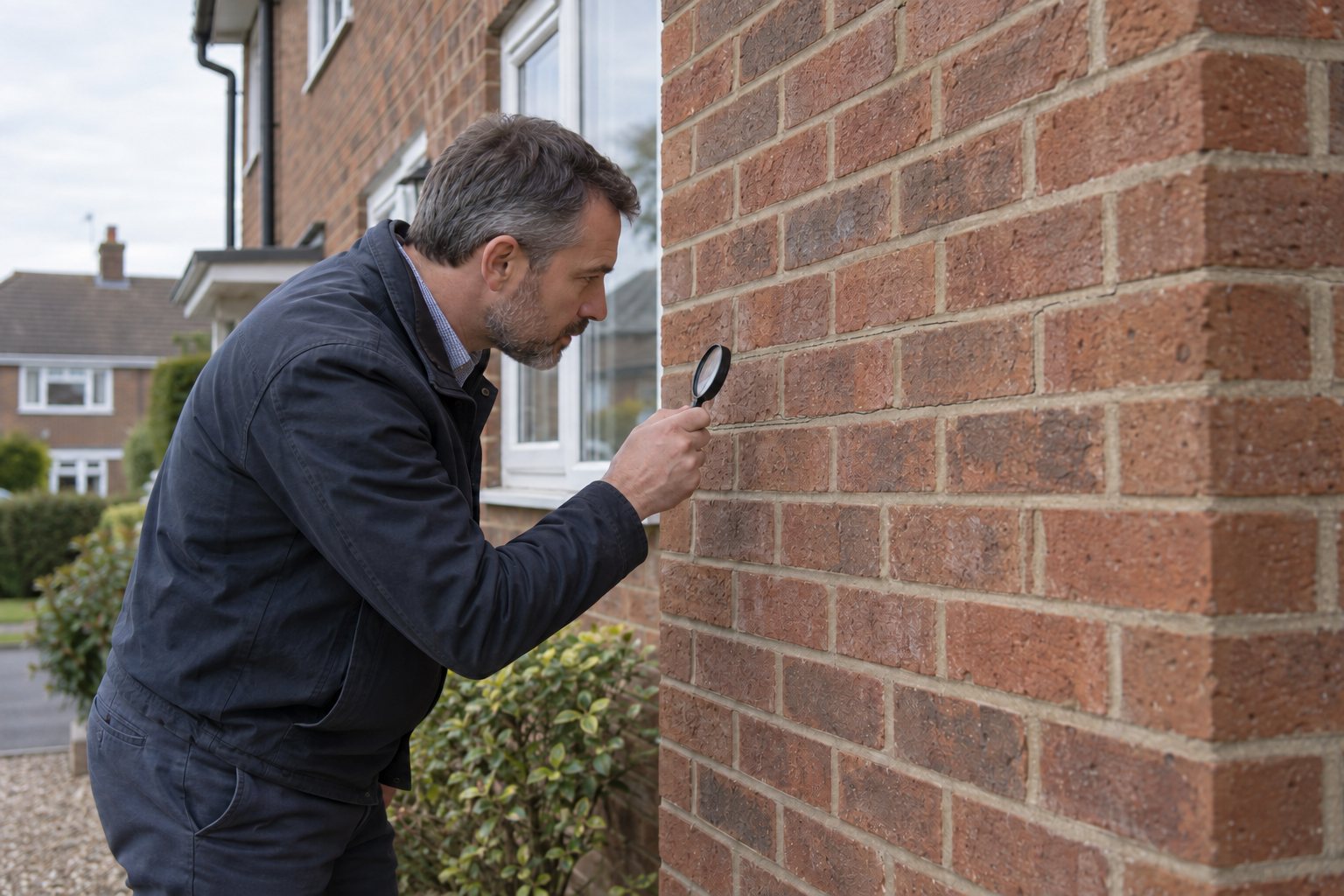
- horizontal cracking in external brickwork close to damp-proof-course level;
- slight oversailing, where masonry above a bed joint is pushed beyond the courses below;
- displacement near wall corners; and
- white deposits or efflorescence in some locations.
Severely affected concrete may show pale crystalline deposits, friability or softening when exposed. Those conditions are not normally visible during an occupied pre-purchase inspection because floor coverings and finishes remain in place.
Similar symptoms can have different causes
None of these visible signs is unique to sulphate damage. A competent inspection considers other explanations rather than jumping from “crack” to “chemical attack”.
| Visible clue | Other possible explanations | Appropriate next question |
|---|---|---|
| Domed or uneven solid floor | Poor original workmanship, settlement of fill, thermal effects or ground heave | Is the distortion measurable, patterned and progressive? |
| Cracked screed or tiles | Shrinkage, debonding, weak screed or inadequate movement joints | Does the crack continue into the slab below? |
| Door frames out of square | Joinery movement, alterations, settlement or wall movement | Is the floor lifting the partition or is another element moving? |
| Crack near DPC level | Thermal movement, local masonry defect or structural movement | Is there outward displacement consistent with slab expansion? |
| Damp or white deposits | Plumbing leaks, condensation, penetrating moisture or ordinary efflorescence | What is the moisture source and is reactive fill actually present? |
| Red or black ash beneath the floor | Historic fill that may or may not be harmful | Do representative tests and the concrete condition show active attack? |
Can a house survey confirm the diagnosis?
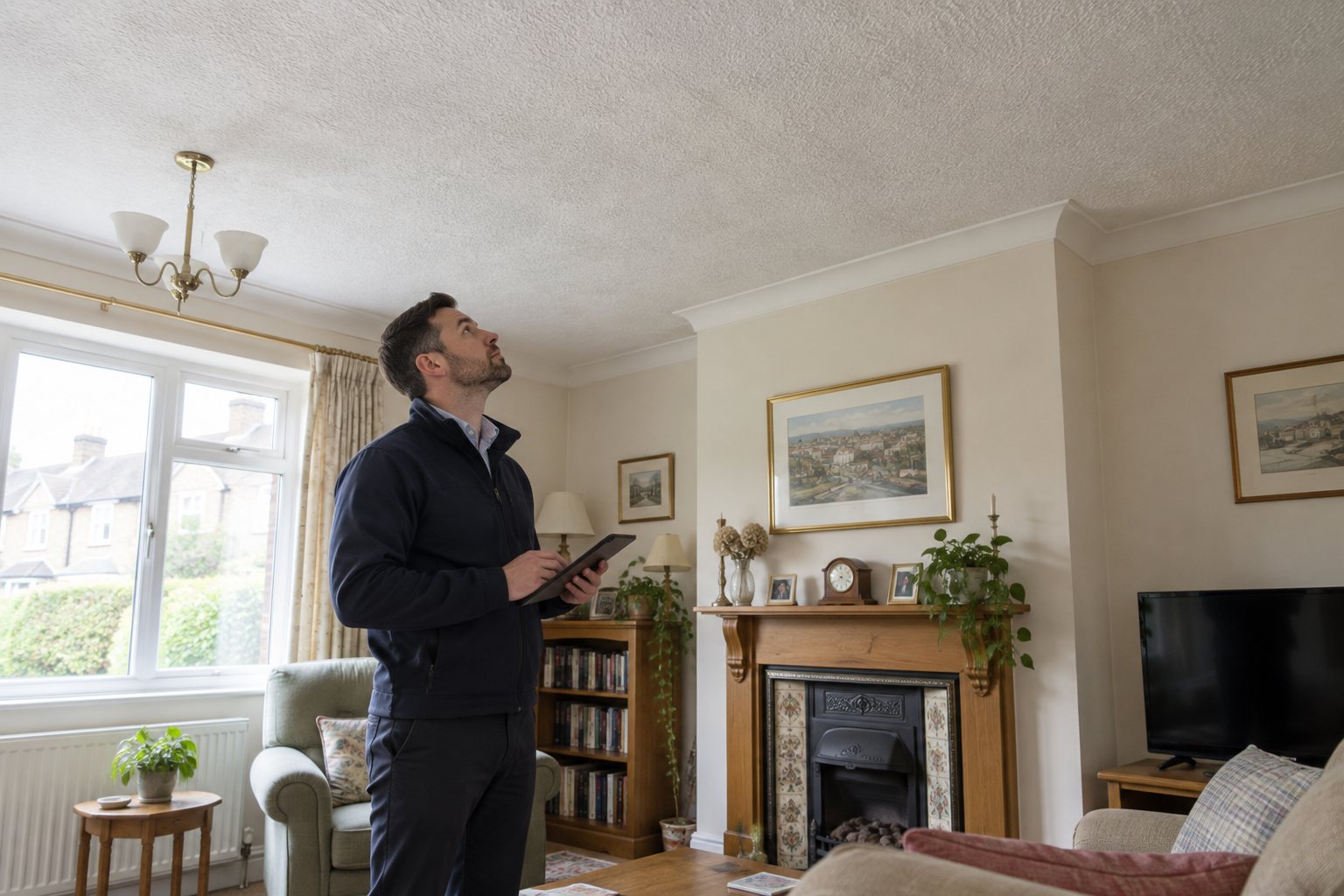
A home survey can identify risk indicators, record floor levels and distortion, examine visible cracking and consider the building’s age and construction. It can also explain whether a specialist investigation is justified. It does not normally provide chemical confirmation.
The distinction arises from the scope of an RICS inspection. In a Level 2 Home Survey, the surfaces of exposed floors are inspected, but fitted carpets, floor coverings and floorboards are not lifted. A Level 3 Building Survey is more extensive and may include measuring an identified slope or deflection and lifting corners of loose, unfitted coverings where practicable. The surveyor still does not force open the building fabric or break through a concrete floor without permission and a separately agreed scope.
This means a report may legitimately say that floor movement is “consistent with possible sulphate attack” and recommend further investigation. That is not evasive wording. It recognises that the decisive evidence may be concealed under finishes and within the slab and fill.
How is sulphate attack properly investigated?
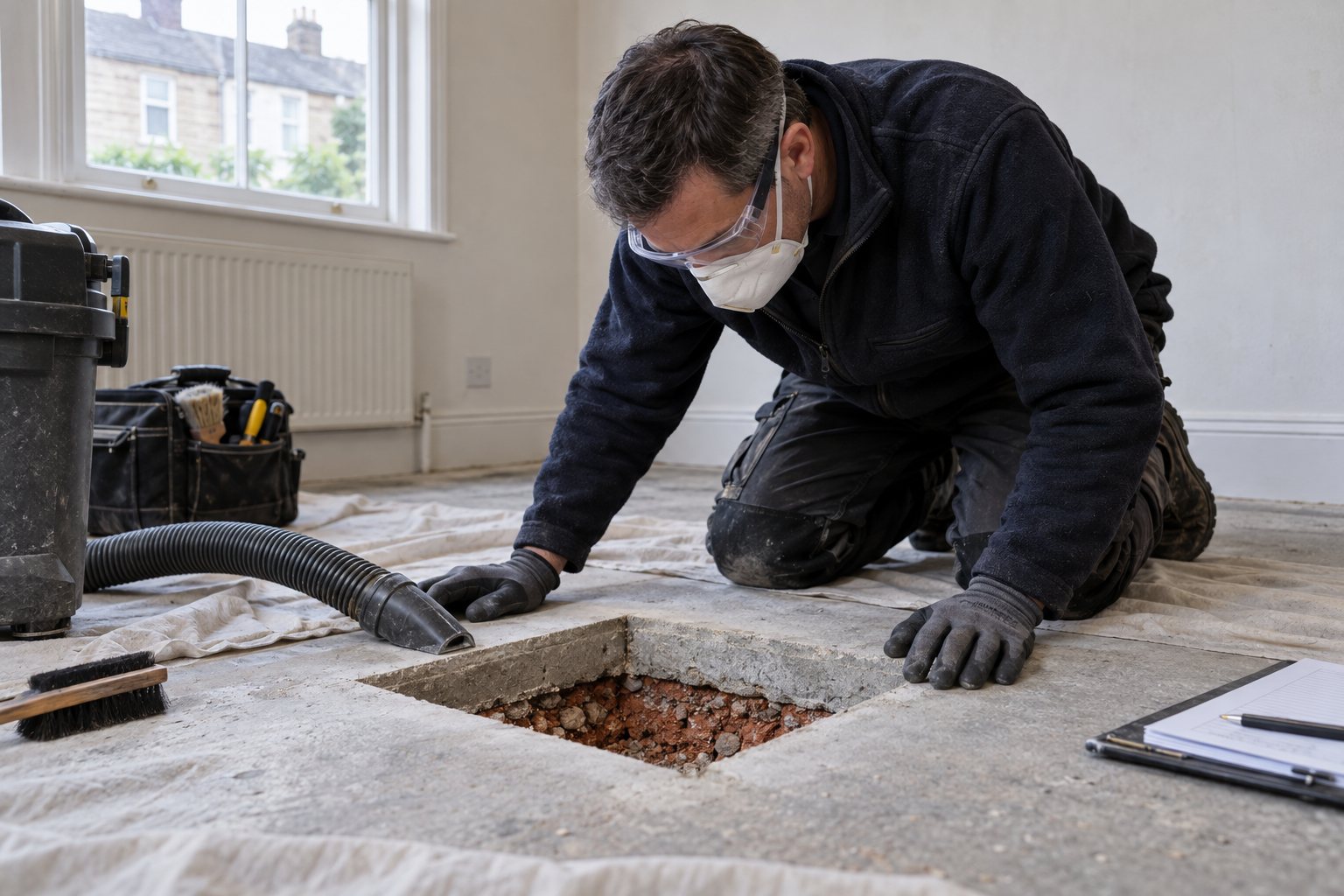
A useful investigation brings several strands of evidence together. The precise scope should be designed by an appropriately experienced professional, because indiscriminate drilling can damage services, finishes and damp-proofing.
1. Review the history and construction
The investigator considers the property’s age, floor type, extensions, previous repairs, water leaks and any documented cases in neighbouring homes of similar construction. Records of a replacement floor or earlier laboratory testing can be valuable, but their scope and sample locations must be checked.
2. Record visible damage
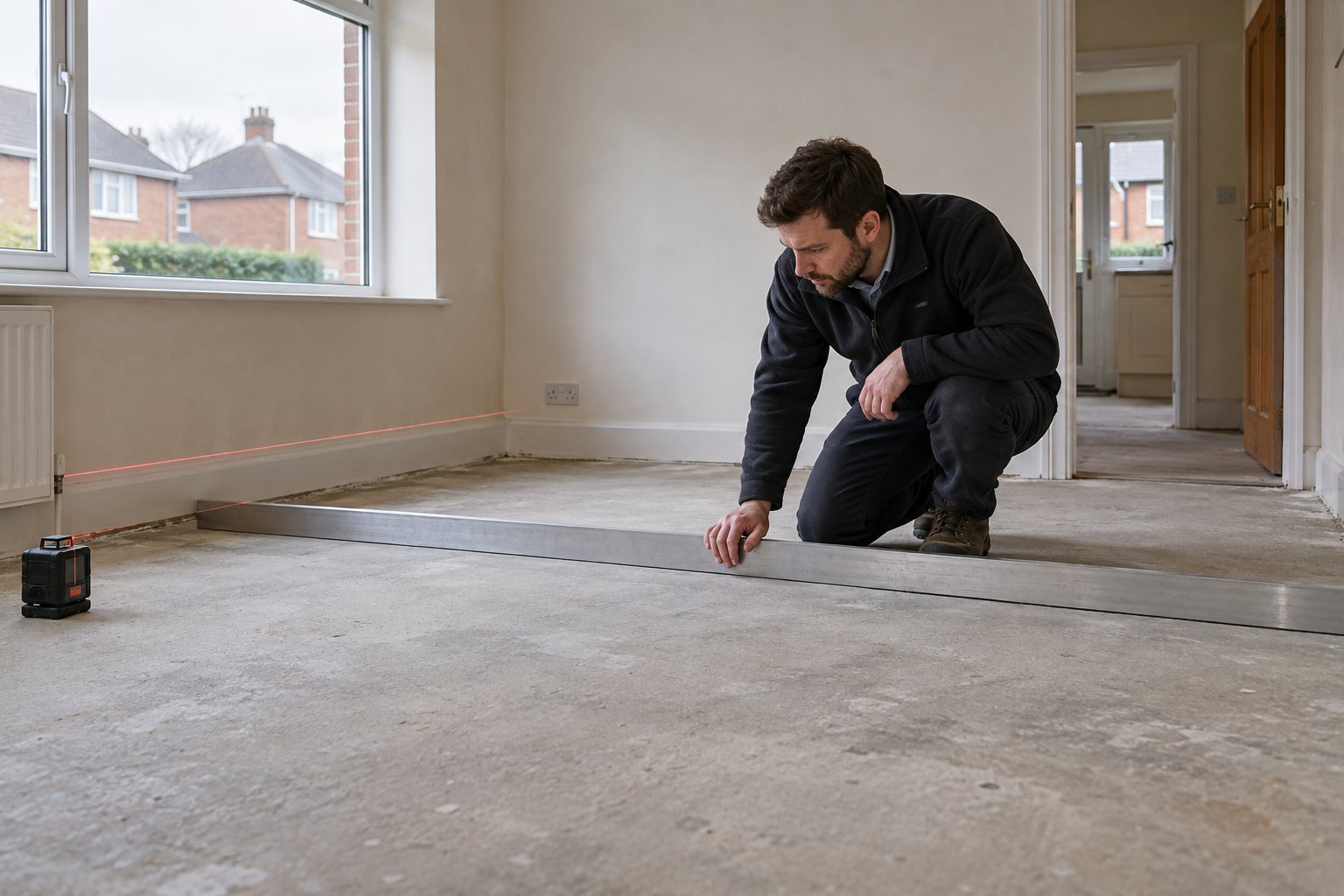
Floor levels are measured across the affected rooms, and the character of cracking is mapped. Walls, partitions, doors and external brickwork are inspected for related distortion. Photographs and measurements create a baseline against which future change can be assessed.
3. Open representative areas
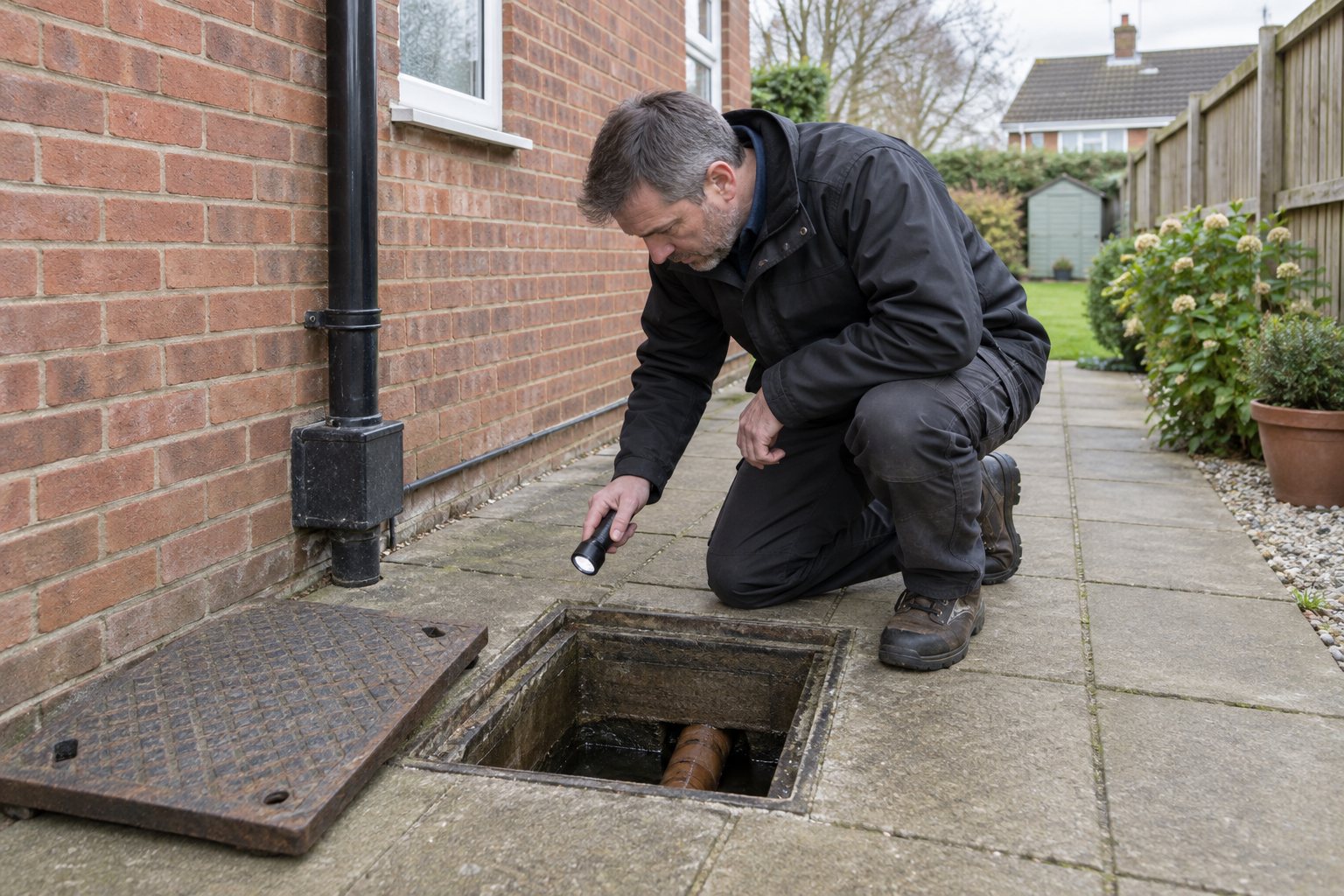
With the owner’s permission, a penetrative inspection may be needed to establish the slab thickness and condition, identify the fill and determine whether an effective membrane separates the materials. The locations should be selected to answer the diagnostic question, often including both affected and apparently unaffected areas.
4. Take representative samples
Samples of concrete and hardcore may be required for sulphate testing, moisture assessment and other laboratory examination. The underlying material can vary greatly within one room, so one or two convenient spot samples should not be treated as a definitive measure of future risk. Government guidance specifically warns that simplistic reliance on a small number of soluble sulphate readings can be either too optimistic or too pessimistic.
5. Interpret laboratory findings in context
Depending on the evidence, a specialist laboratory may analyse the concrete and fill and use petrographic examination or X-ray diffraction to look for reaction products such as ettringite or thaumasite. Results must be considered alongside the membrane, moisture, concrete condition, pattern of damage and likelihood of continued transport. A number on a certificate is not a complete diagnosis.
Is the damage always progressive?
The process is generally slow, and the degree of deterioration varies. A slightly uneven floor that has remained unchanged for many years is a different proposition from increasing doming accompanied by widening cracks and masonry displacement. Changes in the water regime also matter: fill that was previously too dry may become wetter after flooding, a leaking service pipe or alteration to drainage.
An experienced professional may express future risk as low, moderate or high rather than claim absolute certainty. That assessment should account for the property’s history, the presence or absence of a membrane, current moisture and evidence from comparable nearby construction. It should not be based on sulphate content alone.
Where slight damage has been reliably attributed to the mechanism and immediate work is not justified, documented periodic inspection may sometimes be advised. A purchaser should still consider how unresolved risk could affect future saleability, lending, insurance and appetite for disruption. Monitoring is a professional strategy, not a reason to ignore visible change.
How is an affected concrete floor repaired?
There is no responsible one-size-fits-all repair. The appropriate work depends on the severity and extent of the attack, the fill composition, moisture, wall involvement, the reliability of the investigation and the degree of assurance required.
Potential approaches include:
- monitoring limited, stable damage under an agreed inspection plan;
- removing and replacing the damaged slab while safely separating a suitable retained fill from the new construction;
- removing part of the sulphate-bearing hardcore and rebuilding the floor; or
- complete removal and replacement of the affected fill and concrete where the findings justify it.
A replacement floor will normally involve a properly detailed membrane, appropriate insulation and a new slab designed for the building. Associated wall or partition damage may also need repair. Existing services can complicate excavation, and waste must be characterised and disposed of correctly.
The government’s principal technical guide dates from 2008. It remains valuable for understanding the defect and investigation, but its example costs, insulation targets and construction details should not be copied into a current specification. Any remedial design must satisfy today’s Building Regulations and site-specific requirements, including any relevant radon precautions.
Superficial measures such as levelling the finish or filling a crack do not address an active chemical reaction below. Before accepting a contractor’s quotation, check that it follows the diagnostic report and states the area, depth, retained material, membrane detail, insulation, services, finishes and wall repairs included.
What should a buyer do before exchange?
Uncertainty is greatest when a survey flags signs but no one has established what lies below the floor. The period before exchange is the best opportunity to replace assumptions with evidence.
Before-exchange checklist
- ☐ Ask the surveyor to identify the exact signs and affected rooms.
- ☐ Confirm whether “sulphate attack” is a diagnosis, a possibility or a general risk warning.
- ☐ Request records of previous floor investigations, laboratory results and remedial work.
- ☐ Ask whether neighbouring properties of the same construction have documented cases.
- ☐ Obtain the seller’s written consent before any intrusive inspection or sampling.
- ☐ Commission an appropriately experienced specialist to design representative testing.
- ☐ Ensure the investigation considers the slab, hardcore, membrane, moisture and alternative causes.
- ☐ Obtain a written interpretation and repair specification, not laboratory figures alone.
- ☐ Request itemised quotations including excavation, disposal, reinstatement and associated wall repairs.
- ☐ Discuss material findings with your conveyancer, lender and insurer before exchange.
- ☐ Decide whether to proceed, renegotiate or withdraw only after understanding likely cost, disruption and residual risk.
Should you buy a house with possible sulphate attack?
Possible attack is not an automatic reason to walk away, but an unresolved material concern should not be minimised. A sound decision depends on the quality of the evidence.
A buyer may reasonably proceed where the mechanism has been discounted, or where limited damage has been competently assessed and reflected in the price and future plan. A confirmed, widespread problem may still be purchasable if there is a robust specification, realistic quotations, lender acceptance and sufficient allowance for disruption and contingency. Another buyer may decide that the uncertainty or project is outside their budget and appetite.
Be cautious about a vendor-funded “repair” completed before the cause has been established. Fresh finishes can conceal cracking without addressing the slab. Ask for the original investigation, scope, invoices, photographs and any professional certification, then have the information reviewed independently.
Frequently asked questions
Is sulphate attack the same as subsidence?
No. Subsidence generally involves downward movement of the ground or foundations. This mechanism involves a chemical reaction that can expand and lift a floor slab. Both can crack walls and finishes, which is why diagnosis should consider the whole pattern of movement.
Do all houses with red-ash hardcore have a problem?
No. Historic fill may contain varying amounts of reactive material, and damaging attack also depends on moisture, the concrete and the presence of an effective separating membrane. Red material beneath a floor is a reason for informed assessment, not proof of failure.
Can a Level 3 Building Survey confirm sulphate attack?
It can identify visible signs, consider likely causes and recommend further investigation. It cannot usually confirm the chemistry because normal inspection does not involve breaking through the slab and conducting laboratory analysis.
How is sulphate attack confirmed?
Confirmation may involve mapping distortion, opening representative areas, inspecting the floor build-up and membrane, and laboratory analysis of properly selected concrete and hardcore samples. The findings should be interpreted together.
Is one high sulphate test result enough?
Not usually. The underlying material can be highly variable, and the potential for damage also depends on moisture, concrete susceptibility and transport. Government guidance cautions against a conclusion based solely on one or two spot determinations.
Must an affected floor be replaced immediately?
Not in every case. Slight, stable damage may sometimes be monitored following professional assessment. Progressive distortion, significant deterioration or wall displacement can justify more extensive work. The response should follow the severity and risk evidence.
Can sulphate attack affect a mortgage or insurance?
It may affect market confidence or a lender’s or insurer’s view, particularly where the diagnosis and repair cost remain unresolved. Policies and lending decisions vary, so provide the actual specialist findings rather than assuming a universal answer.
Can the damage be repaired locally?
Sometimes, but a small surface patch is not adequate if the underlying slab and fill continue to react. The investigation must establish the extent and mechanism before a professional specifies local, partial or comprehensive replacement.
Independent advice before you commit
Harding Chartered Surveyors can assess visible floor distortion, cracking and related building movement within the agreed scope of a home survey or Specific Defect Report. Where the evidence points towards possible chemical deterioration, the report can explain why specialist intrusive testing is needed. Visual inspection alone does not confirm sulphate attack, and laboratory sampling must be separately commissioned where proof is required.
If you are buying an older, altered or visibly defective property, explore Harding’s Level 3 Building Survey or contact the survey team before exchange.
This article provides general information for UK homebuyers and is not a substitute for a property-specific inspection or specialist diagnosis.