

Party Wall Surveyor Chelsea
Party Wall Advice for Chelsea Properties
Harding Chartered Surveyors advises building owners and adjoining owners on party wall matters throughout Chelsea. We review proposed work, prepare and serve notices, record schedules of condition and agree Party Wall Awards where the statutory dispute procedure is engaged.
Chelsea projects often involve Georgian and Victorian terraces, mews houses, mansion blocks, converted flats and high-value refurbishments on confined sites. Loft steels, chimney-breast removal, rear extensions and basement excavation can affect several neighbouring interests, so the design, ownership and foundation information should be checked before the programme is fixed.
If you are planning work or have received a notice, send us the drawings or documents you have. We will explain the appropriate next step and provide a clear quotation. For broader guidance, see our Party Wall Matters overview.
Party Wall Surveyor Chelsea Quote
Send us the proposed drawings, any notice already received and the property addresses involved. We will identify the likely statutory route, explain the available appointments and quote for the work before you proceed.
When does the Party Wall etc. Act 1996 apply?
The Party Wall etc. Act 1996 applies to defined categories of work; it is not a general approval process for every renovation. Notice may be required when a project involves:
- building a new wall at or astride the line of junction;
- cutting into, raising, repairing, demolishing and rebuilding, or otherwise working on an existing party wall or party structure;
- inserting beams, removing chimney breasts, underpinning or carrying out other structural work affecting the shared structure; or
- excavating within three or six metres of a neighbouring building where the statutory depth and angle tests are met.
Typical Chelsea examples include loft-conversion steels, rear or side extensions close to the boundary, alterations within converted buildings, underpinning and basement works. Whether notice is required depends on the design and neighbouring construction, not simply the name of the project.
The Act is separate from planning permission, Building Regulations, listed-building or conservation-area controls and any consent required under a lease or licence to alter. Securing one approval does not remove the need to consider the others.
Party wall notices, responses and timescales
A Party Structure Notice normally requires at least two months before the proposed start date. A Line of Junction Notice or excavation notice normally requires at least one month. Notices should be served early enough for the adjoining owner to consider the proposal and for any surveyor appointments and Award to be completed.
The adjoining owner generally has 14 days to respond. Where there is more than one adjoining property or more than one qualifying owner, including certain leaseholders with an interest exceeding one year, each relevant owner may need to be notified. Excavation notices must include sufficient drawings and details to show the proposed site and depth.
An adjoining owner may consent in writing, appoint an agreed surveyor jointly with the building owner, or appoint a separate surveyor. For party-structure and excavation notices, no response within the statutory period normally means a dispute is deemed to have arisen. Notifiable work should not begin until written consent has been obtained or an Award has been served; an earlier start also requires the adjoining owner’s written agreement.
Advice for building owners and adjoining owners
A surveyor appointed under the Act must act impartially, regardless of which owner made the appointment. The statutory role is to resolve the matters in dispute and determine the practical arrangements for the notifiable work.
For building owners, early advice helps establish which sections of the Act apply, who must receive notice and what technical information is needed. We can review the drawings, prepare and serve the notices, liaise with adjoining owners and coordinate with the architect or engineer where clarification is required.
For adjoining owners, receiving a notice does not mean you must oppose the project. We can explain the proposal and the choices available: written consent, one agreed surveyor for both owners, or separate surveyors. Dissent is the statutory route for closer review; it is not an objection to planning permission.
Our work can include:
- reviewing drawings, ownership information and the proposed method of work;
- preparing or checking Party Wall Notices;
- recording a photographic schedule of condition before work begins;
- agreeing a Party Wall Award covering relevant drawings, safeguards, access and procedures for dealing with damage; and
- making further inspections where the circumstances or Award justify them.
A schedule of condition is not a guarantee that damage will not occur, but it provides useful dated evidence if the condition later needs to be compared. Read the official GOV.UK explanatory booklet and the RICS consumer guide for further guidance.
Party wall issues common in Chelsea
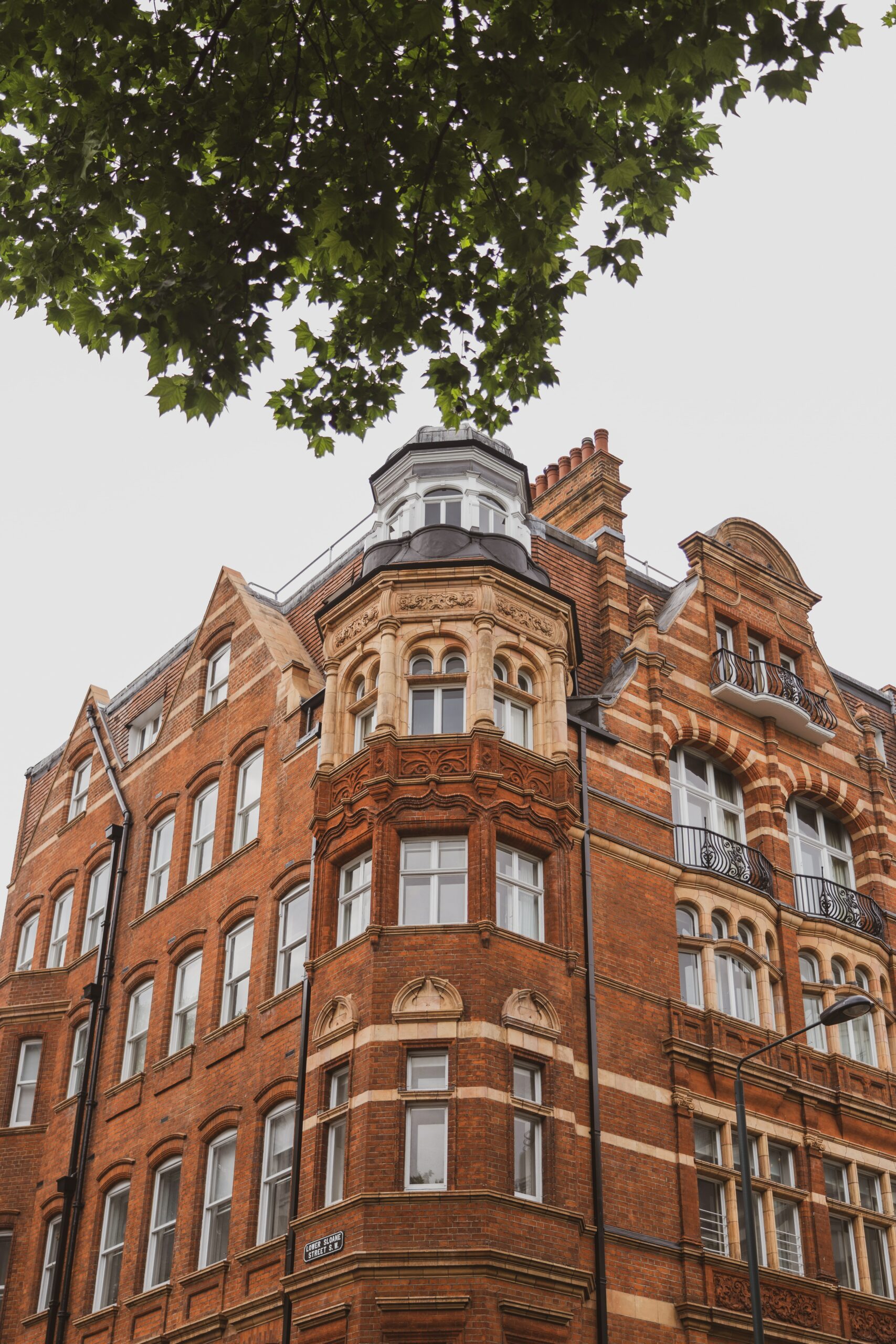
Chelsea’s built environment creates recurring party wall questions. Period terraces and mews houses sit on narrow plots, while mansion blocks and converted houses may contain several separately owned interests. Basement and high-specification refurbishment projects can also involve complex sequencing and close neighbouring foundations.
- Loft conversions: steel beams may bear into a party wall and chimney breasts may be removed.
- Rear and side extensions: new walls may be built at or close to the boundary and new foundations may fall within the excavation provisions.
- Basements and underpinning: deeper excavation requires careful assessment of the section 6 tests and the proposed construction method.
- Flats and mansion blocks: floors, ceilings and walls separating separately accessed premises can be party structures.
- Alterations to older buildings: structural work should be distinguished from ordinary finishes and repairs that fall outside the Act.
Properties around the King’s Road, Sloane Square, Old Church Street, Chelsea Embankment and neighbouring South Kensington vary considerably. The correct procedure depends on the specific drawings, ownership titles and neighbouring foundations. Heritage or conservation constraints may affect the project, but they remain separate from the Party Wall Act.
Party wall procedure also does not determine the legal position of a disputed boundary. Where the location or ownership of the boundary itself is uncertain, separate boundary advice may be needed.
Recent Reviews from Harding Chartered Surveyors
















Fees and choosing a Chelsea party wall surveyor
Where the work is solely for the building owner’s benefit, the building owner will usually pay the reasonable costs of administering the Act, including the adjoining owner’s surveyor where one is properly appointed. Costs can be apportioned differently where work benefits both properties, and unreasonable conduct may affect what is recoverable.
The Act does not prescribe professional qualifications for an appointed surveyor. RICS recommends choosing a suitably experienced chartered surveyor. Harding Chartered Surveyors is an RICS-regulated firm, with professional standards, insurance and a formal complaints procedure.
Before appointing a surveyor, consider:
- relevant experience with the proposed work and Chelsea property types;
- whether the quotation clearly explains the scope and charging basis;
- availability to review drawings and serve notices within the programme;
- clear communication with owners and the design team; and
- an understanding that the statutory appointment is impartial.
We can act as the building owner’s surveyor, the adjoining owner’s surveyor or, where both owners agree, as the agreed surveyor. Our Chelsea coverage includes SW3 and nearby parts of SW10, from the King’s Road and Sloane Square to Old Chelsea, Chelsea Embankment and the border with South Kensington.
For an initial assessment, send us your plans or the notice you have received. We will explain whether the Act is likely to apply, what information is still needed and the next practical step.